
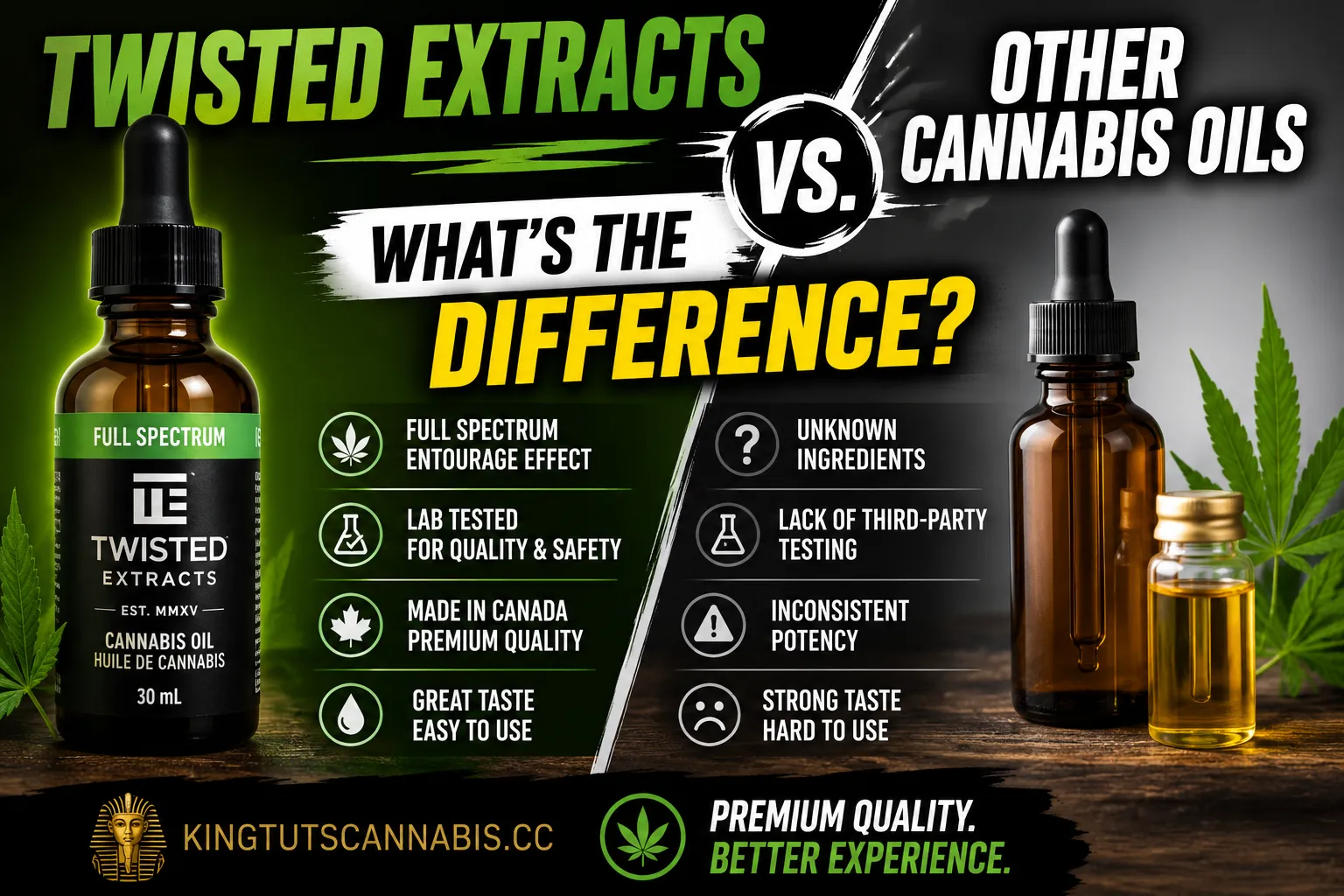
As the legal cannabis market continues to grow, consumers have access to a wide variety of cannabis products, including edibles, oils, capsules, and tinctures. Among the well-known names in Canada’s regulated cannabis industry is Twisted Extracts, a brand recognized primarily for its cannabis-infused edibles rather than traditional cannabis oils.
If you’re comparing Twisted Extracts with other cannabis oil products, understanding their intended uses, formulations, and product formats can help you make a more informed purchasing decision.
What Are Twisted Extracts?
Twisted Extracts is a cannabis brand best known for producing:
-
Cannabis-infused gummies
-
Jelly bites
-
Caramels
-
Fruit chews
-
Other edible cannabis products
Many of its products are formulated with clearly labeled cannabinoid content, making dosing information easier to understand for adult consumers purchasing through legal channels.
What Are Cannabis Oils?
Cannabis oils are liquid products that contain cannabinoids extracted from the cannabis plant and suspended in a carrier oil.
Depending on the product, they may contain:
-
THC
-
CBD
-
A combination of THC and CBD
-
Additional cannabinoids or naturally occurring terpenes
Cannabis oils are available in various formulations depending on the manufacturer and local regulations.
Twisted Extracts vs. Cannabis Oils
|
Feature |
Twisted Extracts (Edibles) |
Cannabis Oils |
|
Product format |
Gummies, chews, caramels |
Liquid oil |
|
Consumption |
Eaten |
Typically measured as a liquid according to product directions |
|
Labeling |
Individually labeled cannabinoid content |
Cannabinoid concentration per bottle or serving |
|
Flavor |
Fruit and confectionery flavors |
May have natural cannabis or flavored profiles |
|
Variety |
Focus on infused edible products |
Wide range of cannabinoid formulations |
Key Differences
1. Product Format
The biggest distinction is how the products are presented.
Twisted Extracts products are designed as infused edibles, while cannabis oils are liquid formulations intended for measured servings according to the manufacturer’s instructions.
2. Ingredient Profiles
Both product categories may contain cannabinoids such as THC and CBD, but ingredient lists can differ.
Some cannabis oils include:
-
Carrier oils
-
Botanical flavorings
-
Naturally occurring terpenes
Edibles typically include additional food ingredients, sweeteners, and flavorings.
3. Label Transparency
Licensed cannabis products commonly provide information about:
-
Cannabinoid content
-
Ingredients
-
Batch numbers
-
Packaging dates
-
Regulatory compliance
Reviewing product labels can help consumers compare products more effectively.
4. Product Selection
Cannabis oils are available in many formulations, including:
-
THC-dominant
-
CBD-dominant
-
Balanced THC:CBD ratios
Twisted Extracts focuses primarily on edible formats with a variety of flavor options.
Factors to Consider When Comparing Products
When evaluating legal cannabis products, look for:
✔ Third-party or regulatory testing where required
✔ Clear cannabinoid labeling
✔ Ingredient transparency
✔ Child-resistant packaging
✔ Licensed retailers
These features can help support informed purchasing decisions.
Storage Considerations
To help maintain product quality:
-
Store products in a cool, dry place.
-
Keep them in their original, child-resistant packaging when possible.
-
Protect them from excessive heat, moisture, and direct sunlight.
-
Keep all cannabis products securely stored and out of reach of children and pets.
Frequently Asked Questions
Are Twisted Extracts the same as cannabis oils?
No. Twisted Extracts is primarily known for cannabis-infused edible products, while cannabis oils are liquid cannabis formulations.
Do both products contain cannabinoids?
They can. Depending on the formulation, both may contain THC, CBD, or a combination of cannabinoids.
How can I compare products?
Check the product label for cannabinoid content, ingredients, serving information, and regulatory compliance, and purchase only from licensed retailers where cannabis is legal.
Which option is better?
There is no universally “better” option. The most appropriate choice depends on individual preferences, the specific product format, and local legal availability. Reading labels and understanding the product’s intended use are key to making an informed decision.
